
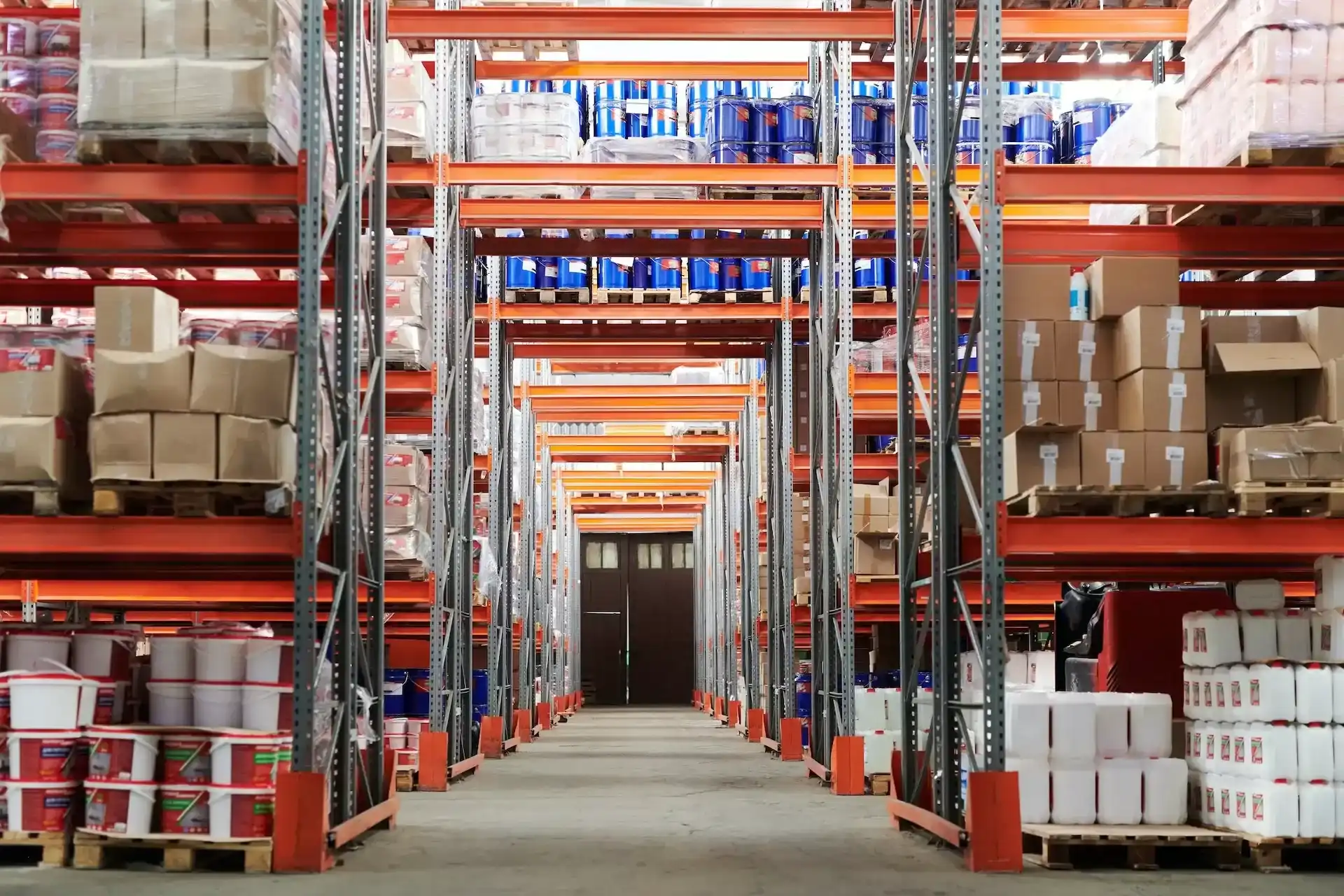
How Co-Packing and Fulfillment Under One Roof Saves Brands Time and Money
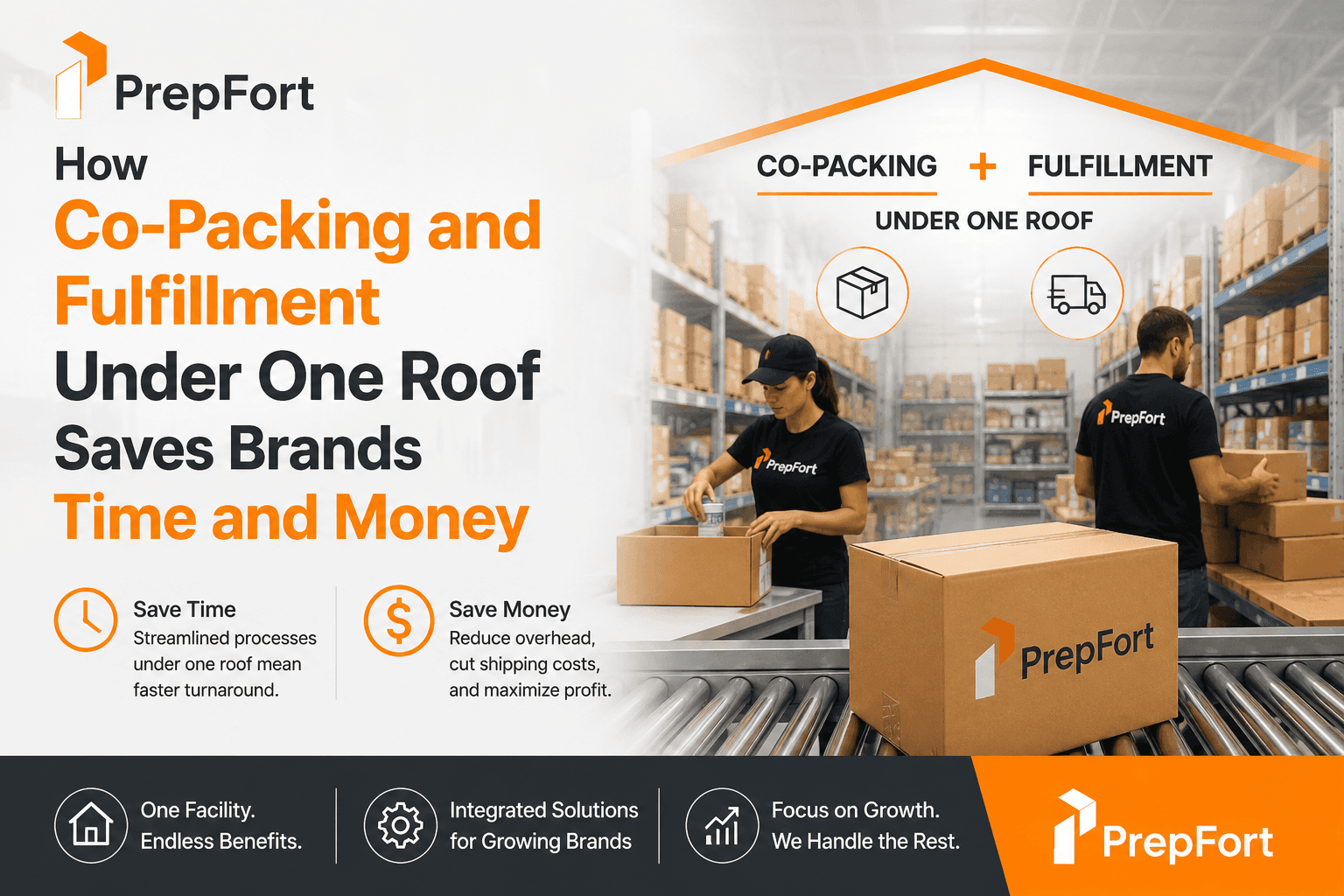
Learn how one-stop co-packing fulfillment, kitting, and shipping under one roof helps brands save time, reduce freight costs, and scale faster.
August 25, 2026 · By PrepFort TeamFor growing food, candy, snack, and consumer product brands, managing manufacturing, co-packing, kitting, warehousing, and fulfillment through separate vendors can create unnecessary complexity. Every hand-off introduces another shipment, another invoice, another communication point, and another opportunity for delay or error.
A product may be manufactured by one company, shipped to a co-packer for packaging, transported to a warehouse for storage, moved again for kitting, and finally sent to a fulfillment center for customer or retail orders. Although each individual vendor may perform its role well, the overall process can become slow, expensive, and difficult to manage.
Co-packing and fulfillment under one roof offers a more connected alternative.
With an integrated operation, brands can move products through manufacturing, packaging, kitting, storage, and shipping within one coordinated facility. This reduces unnecessary transportation, simplifies communication, improves inventory visibility, and helps brands respond faster to customer and retail demand.
Manufacturer → Co-Pack → Kit → Ship — all from a single 30k sqft Chicago warehouse. No hand-offs, no delays, no extra freight.
This model is especially valuable for brands searching for:
Private label candy co-packing.
Candy contract manufacturing.
A confectionery co-packer.
One stop co-packing fulfillment kitting Chicago.
Manufacturer to fulfillment one location.
What Co-Packing and Fulfillment Under One Roof Means
Co-packing is the process of outsourcing some or all of a product’s packaging, assembly, labeling, or preparation to a specialized partner. Fulfillment is the process of storing finished goods, picking orders, packing shipments, and sending products to customers, retailers, distributors, Amazon, or other sales channels.
When these services are handled in one location, the process becomes more connected.
Instead of moving finished products between facilities, a brand can use one warehouse for:
Receiving materials.
Manufacturing or product preparation.
Packaging.
Labeling.
Bundling.
Kitting.
Finished-goods storage.
DTC fulfillment.
Wholesale fulfillment.
Retail shipments.
Amazon or marketplace orders.
The result is a more streamlined supply chain with fewer physical transfers and fewer points of coordination.
Integrated fulfillment models can reduce extra handling, shorten movement between production and shipping, and provide a more controlled operational process.snapl
Why Separate Vendors Create Delays
Working with multiple vendors can appear flexible at first. One company manufactures the product, another handles packaging, and a third manages distribution. But as order volume increases, the gaps between vendors often become more visible.
More Transportation
Every time inventory moves from one facility to another, the brand pays for freight, loading, unloading, receiving, and handling.
More Communication
The brand must coordinate schedules, production updates, packaging materials, inventory counts, shipment appointments, and changes with multiple teams.
More Opportunities for Errors
Product counts, packaging components, labels, purchase orders, and shipping instructions can become inconsistent when information passes between different companies.
Less Inventory Visibility
When inventory is spread across multiple locations, it may be harder to know exactly what is being manufactured, packed, stored, kitted, or ready to ship.
Slower Response Times
A change in packaging, a new retailer requirement, or an urgent customer order may require coordination across several facilities before work can begin.
A single-site model reduces many of these complications by keeping connected activities together.
The Manufacturer-to-Fulfillment Process
The biggest advantage of a unified operation is the ability to manage the full product journey in one place.
Step One: Manufacture or Receive Product
The process begins with manufacturing, bulk product receipt, or the arrival of finished and semi-finished goods. Materials can be checked, counted, and recorded before moving into packaging or production.
Step Two: Co-Pack and Prepare
Products can then be packaged according to the brand’s specifications. This may include:
Retail packaging.
Private label packaging.
Pouch filling.
Box assembly.
Label application.
Shrink wrapping.
Product bundling.
Display preparation.
Promotional packaging.
Step Three: Kit and Assemble
Products can be combined into kits, sets, gift boxes, subscription packages, retail displays, or promotional bundles.
Step Four: Store Finished Inventory
Once products are packed or kitted, they can move directly into warehouse storage instead of being transported to a separate facility.
Step Five: Pick, Pack, and Ship
The same warehouse can fulfill:
Direct-to-consumer orders.
Retail purchase orders.
Wholesale shipments.
Amazon FBA shipments.
Marketplace orders.
Subscription orders.
Promotional campaigns.
This creates a continuous workflow from production to customer delivery.
Private Label Candy Co-Packing
Private label candy co-packing allows businesses to sell confectionery products under their own brand without building and operating a complete candy production and packaging facility.
A private label candy co-packer may support products such as:
Gummies.
Sour candy.
Hard candy.
Lollipops.
Candy mixes.
Chocolate products.
Branded gift boxes.
Custom candy bags.
Retail-ready confectionery.
Promotional candy packs.
Private label programs can help retailers, ecommerce brands, event companies, distributors, subscription boxes, and consumer product businesses launch candy products faster.
How Private Label Candy Co-Packing Works
A typical process may include:
Product selection or formula discussion.
Packaging and brand review.
Production planning.
Candy manufacturing or product sourcing.
Packaging.
Labeling.
Quality checks.
Case packing.
Warehousing.
Fulfillment or distribution.
When these steps happen under one roof, brands do not need to transport finished candy between separate production, packaging, and fulfillment locations.
Benefits for Private Label Brands
Private label candy co-packing can help brands:
Launch without investing in a full facility.
Reduce fixed equipment costs.
Access experienced production support.
Test new products or pack sizes.
Create retail-ready packaging.
Build custom bundles.
Scale production based on demand.
Ship directly to customers or retailers.
The brand can focus on marketing, sales, product positioning, and customer relationships while the co-packing partner manages the operational workflow.
Candy Contract Manufacturing
Candy contract manufacturing involves outsourcing the production of confectionery products to a specialized manufacturer. Depending on the arrangement, the contract manufacturer may support formulation, ingredient sourcing, production, packaging, labeling, case packing, and fulfillment preparation.
Contract manufacturing can be useful for brands that:
Have a product concept but no facility.
Need additional production capacity.
Want to scale an existing candy line.
Need seasonal production support.
Want to enter a new confectionery category.
Need flexible volume options.
Want to outsource production operations.
Candy Manufacturing and Fulfillment Together
When candy contract manufacturing and fulfillment are managed in separate facilities, finished product must be transported before it can be stored or shipped. That additional transfer creates freight expenses and adds time to the process.
When manufacturing and fulfillment operate in the same location, finished goods can move directly into:
Storage.
Kitting.
Case packing.
Retail staging.
DTC fulfillment.
Amazon shipment preparation.
This helps reduce unnecessary handling and improves operational visibility.
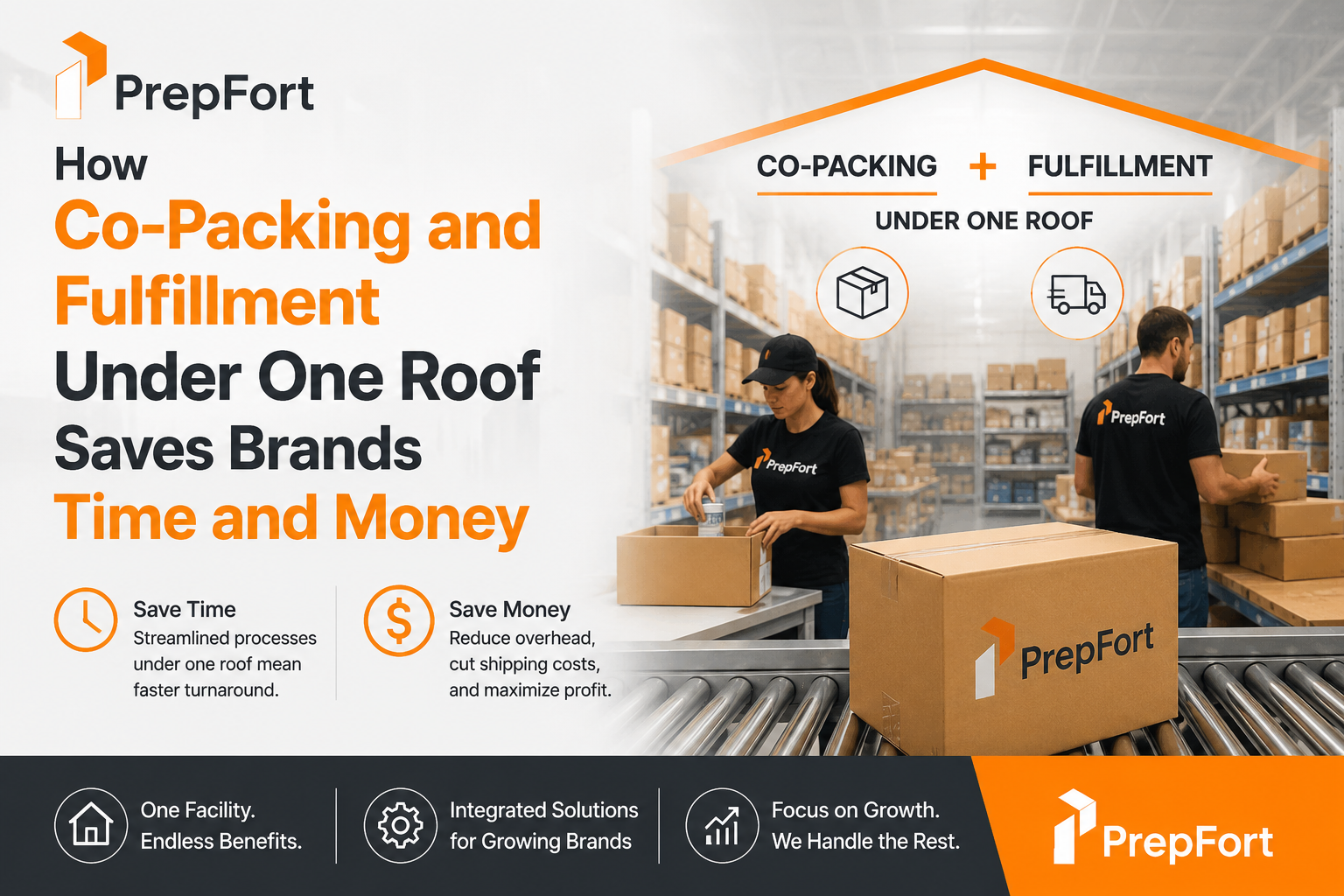
Support for New Product Launches
New candy products often require coordination between manufacturing, packaging, labeling, marketing, and sales. A one-location partner can reduce the number of separate launch stages.
The process can include:
Product development support.
Packaging coordination.
Small pilot production.
Labeling.
Sample assembly.
Influencer kits.
Retail samples.
Launch inventory.
DTC fulfillment.
Wholesale distribution.
A streamlined launch process can help brands move from concept to market more quickly.
Confectionery Co-Packer Services
A confectionery co-packer supports the packaging and preparation of candy and sweet products for resale. Services may include filling, labeling, bundling, shrink wrapping, case packing, and kitting.
Candy co-packing can be used for:
Custom branded products.
Private label lines.
Retail packages.
Promotional products.
Seasonal gift sets.
Subscription boxes.
Corporate gifts.
Event candy.
Online store bundles.
Amazon-ready shipments.
Some co-packers focus on secondary packaging, while others provide broader manufacturing and fulfillment capabilities. Brands should confirm which services are available before beginning a project.
Why Confectionery Co-Packing and Fulfillment Work Well Together
Candy products often require coordinated packaging, storage, and shipping. Managing these steps under one roof can help brands:
Reduce extra transfers.
Protect finished packaging.
Improve inventory records.
Prepare kits faster.
Consolidate outbound shipments.
Reduce communication delays.
Respond to seasonal demand.
A co-packer that also provides fulfillment becomes more than a packaging supplier. It becomes an operational partner.
One Stop Co-Packing Fulfillment Kitting Chicago
The search phrase one stop co-packing fulfillment kitting Chicago reflects a growing need for integrated supply chain services in the Midwest.
A Chicago-area facility can provide strategic advantages for brands shipping across the United States because the region is a major transportation and distribution hub. More importantly, the one-location model keeps related activities physically connected.
A 30,000-square-foot Chicago warehouse can support:
Product receiving.
Manufacturing support.
Co-packing.
Labeling.
Kitting.
Finished-goods storage.
Pick-and-pack fulfillment.
Retail preparation.
Wholesale shipping.
DTC orders.
Amazon and marketplace shipments.
Why Chicago Matters
Chicago is positioned near major highways, rail networks, airports, and distribution routes. For brands serving customers and retailers across the country, this can support efficient outbound shipping.
But geographic location alone is not the main advantage. The bigger benefit is combining product preparation and fulfillment within the same facility.
One Facility, One Workflow
Instead of:
Manufacturing in one state.
Co-packing in another.
Kitting at a third location.
Fulfillment somewhere else.
The brand can use one connected process:
Manufacturer → Co-Pack → Kit → Ship
This is the central value of a one-stop co-packing and fulfillment model.
Manufacturer to Fulfillment One Location
The phrase manufacturer to fulfillment one location describes a supply chain in which production, packaging, storage, kitting, and order shipment are coordinated from one facility.
This model can help reduce:
Inter-facility freight.
Receiving delays.
Repeated unloading.
Duplicate inventory counts.
Extra storage fees.
Vendor coordination.
Packaging transfers.
Scheduling problems.
Order fulfillment delays.
Lower Total Logistics Costs
A brand may reduce costs by eliminating unnecessary transfers between production and fulfillment locations.
The savings may come from:
Fewer freight shipments.
Less loading and unloading.
Reduced receiving labor.
Fewer warehouse appointments.
Fewer packaging transfers.
Lower damage risk.
Less duplicate inventory handling.
The exact savings depend on product type, volume, packaging requirements, freight lanes, and service structure. However, the operational principle is simple: fewer movements often mean fewer costs and fewer opportunities for delay.
Faster Order Processing
When finished products are already in the fulfillment warehouse, orders can move more quickly. The product does not need to be shipped to another facility before it can be picked and packed.
This is useful for:
Product launches.
Retail replenishment.
Seasonal campaigns.
Subscription orders.
Holiday promotions.
Influencer campaigns.
Limited-edition product drops.
Direct-to-consumer sales.
Kitting and Fulfillment Under One Roof
Kitting is the process of grouping multiple products or components into one sellable unit. For candy and confectionery brands, this can include gift boxes, variety packs, holiday assortments, promotional bundles, and retail displays.
A fulfillment partner that also handles kitting can move completed kits directly into inventory or outbound shipping. This avoids transferring assembled products to a separate warehouse.
Kitting Examples
Candy variety packs.
Holiday gift boxes.
Seasonal assortments.
Retail display kits.
Subscription boxes.
Sample packs.
Corporate gift packages.
Product launch kits.
Event favors.
Promotional bundles.
Benefits of Integrated Kitting
Faster assembly.
Fewer handling steps.
Lower labor duplication.
Better inventory tracking.
Reduced shipping errors.
More consistent presentation.
Faster response to promotions.
Kitting can also help brands create new product offers without changing the underlying manufacturing process.
How One Roof Saves Brands Time
Fewer Vendor Conversations
A brand can communicate with one operational partner instead of coordinating manufacturing, packaging, kitting, warehousing, and fulfillment with separate teams.
Faster Approvals
Packaging changes, bundle instructions, shipment schedules, and product updates can be managed within one workflow.
Reduced Scheduling Problems
When multiple vendors are involved, one delayed production or transfer can affect the entire process. A single-site model reduces dependencies between facilities.
Faster Problem Resolution
If there is an inventory discrepancy or packaging issue, the responsible team is located within the same operation. This can shorten investigation and response time.
Faster Product Launches
A launch can move more quickly when product preparation and fulfillment are not separated by additional freight and receiving steps.
How One Roof Saves Brands Money
Reduced Freight
The most direct savings often come from eliminating shipments between manufacturing, co-packing, kitting, and fulfillment facilities.
Less Duplicate Handling
Every transfer can involve labor for loading, unloading, receiving, counting, and re-staging. Keeping the workflow in one location reduces repeated work.
Lower Damage Risk
Products may be exposed to damage every time they are transported or moved between facilities. Fewer movements can help reduce the risk of carton damage, broken packaging, or product loss.
Better Inventory Control
When inventory is managed in one warehouse, the brand may have better visibility into raw materials, packed goods, kits, and ready-to-ship products.
Flexible Production
Co-packing can allow brands to scale production up or down based on demand rather than purchasing and maintaining all equipment internally. Integrated 3PL co-packing services may also support pilot builds, recurring programs, retail compliance, and multi-channel fulfillment.snapl
Retail, DTC, Amazon, and Wholesale Fulfillment
An integrated facility can support multiple sales channels from the same inventory system.
Direct-to-Consumer Fulfillment
For DTC orders, the facility can manage:
Pick and pack.
Branded packaging.
Promotional inserts.
Product bundles.
Subscription orders.
Returns.
Standard and expedited shipping.
Retail Fulfillment
Retail orders may require:
Case quantities.
Retail-ready packaging.
Pallet preparation.
Carton labels.
Purchase-order accuracy.
Routing instructions.
Delivery appointments.
Amazon Fulfillment
Amazon shipments may require:
Product labels.
Case-pack information.
Shipment plans.
Carton preparation.
Inventory staging.
Marketplace-specific requirements.
Wholesale Distribution
Wholesale orders may include larger quantities, specific shipping documents, and retailer-specific packaging instructions.
One warehouse can coordinate these channels while maintaining a clearer view of inventory.
Who Benefits Most from Integrated Co-Packing?
Emerging Brands
New brands can launch products without investing in a complete manufacturing, packaging, and warehouse operation.
Growing Brands
Brands experiencing higher order volume can add capacity without immediately building another facility.
Seasonal Brands
Holiday, event, and promotional products can be manufactured, packed, kitted, stored, and shipped through one coordinated operation.
Retail-Focused Brands
Retailers often require accurate packaging, case quantities, labels, and delivery schedules. A connected workflow can support these requirements more efficiently.
Ecommerce Brands
DTC brands benefit from faster order processing, branded unboxing, product bundles, and simplified inventory management.
What Clients Can Expect
The integrated model is designed around a clear, connected process:
Manufacturer → Co-Pack → Kit → Ship
This means products do not need to travel between unrelated facilities before reaching the customer, retailer, or distributor.
All from a single 30k sqft Chicago warehouse. No hand-offs, no delays, no extra freight.
Clients can expect support with:
Production coordination.
Co-packing.
Private labeling.
Product packaging.
Candy contract manufacturing.
Confectionery co-packing.
Kitting.
Finished-goods storage.
DTC fulfillment.
Retail shipments.
Wholesale distribution.
Marketplace preparation.
One Point of Contact
Instead of managing multiple vendors, the brand has one partner responsible for connected stages of the process. This makes communication simpler and helps reduce delays caused by disconnected workflows.
Better Visibility
A single location can make it easier to understand:
What has been manufactured.
What has been co-packed.
What is ready to kit.
What is stored.
What is ready to ship.
What inventory is allocated to each channel.
Final Thoughts
Co-packing and fulfillment under one roof can help brands save time, reduce freight costs, simplify operations, and scale more efficiently. By combining manufacturing support, private label candy co-packing, candy contract manufacturing, confectionery co-packing, kitting, warehousing, and fulfillment, brands can reduce the number of hand-offs in their supply chain.
The central process is simple:
Manufacturer → Co-Pack → Kit → Ship
All from a single 30k sqft Chicago warehouse.
No hand-offs, no delays, no extra freight.
For brands searching for one stop co-packing fulfillment kitting Chicago or a manufacturer to fulfillment one location solution, an integrated facility can provide a more connected way to bring products from production to customers and retail partners.
Instead of coordinating separate vendors for every stage, brands can work with one operational partner that understands the complete product journey. That can create a faster, more efficient, and more scalable foundation for growth.