
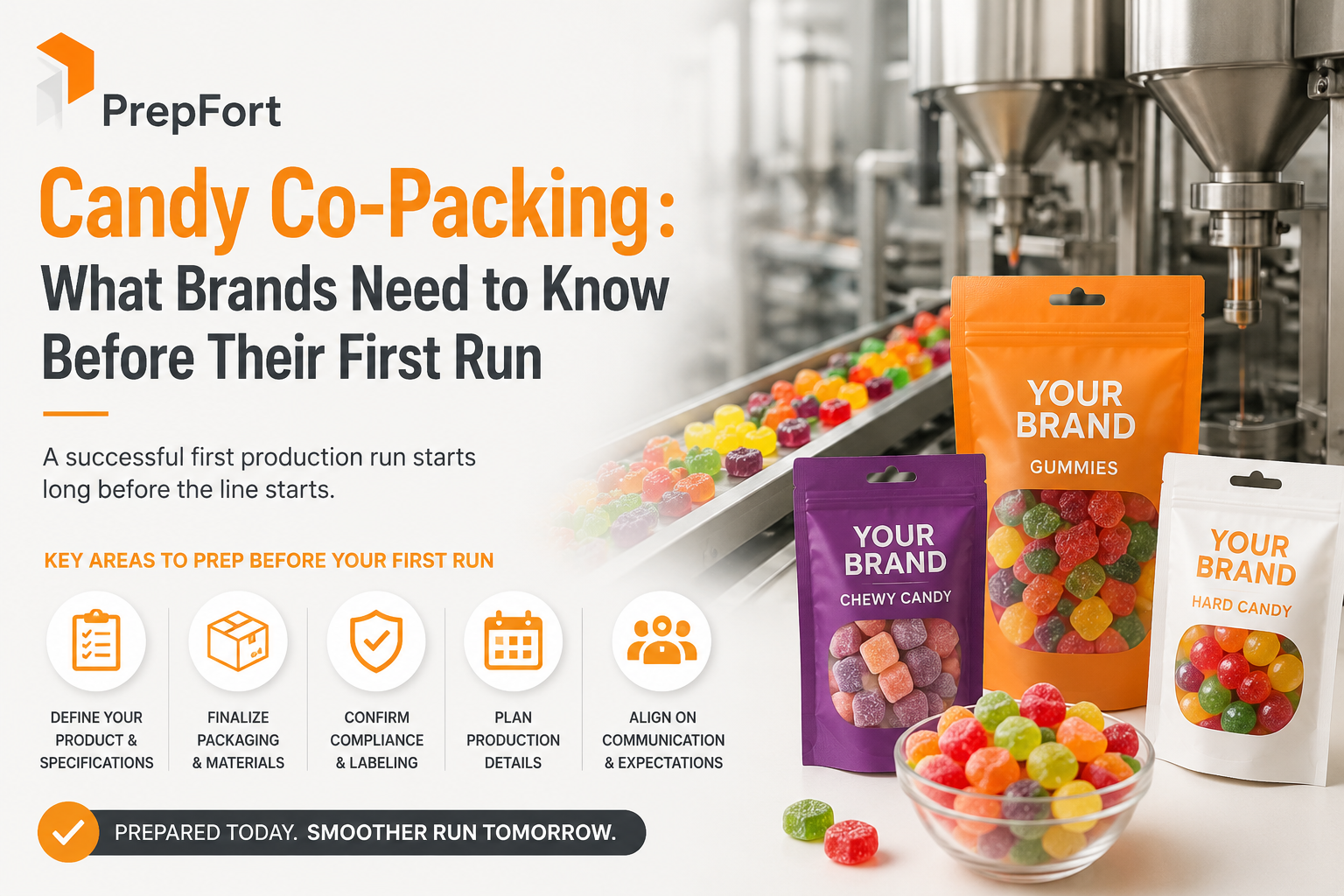
Candy Co-Packing : What Brands Need to Know Before Their First Run
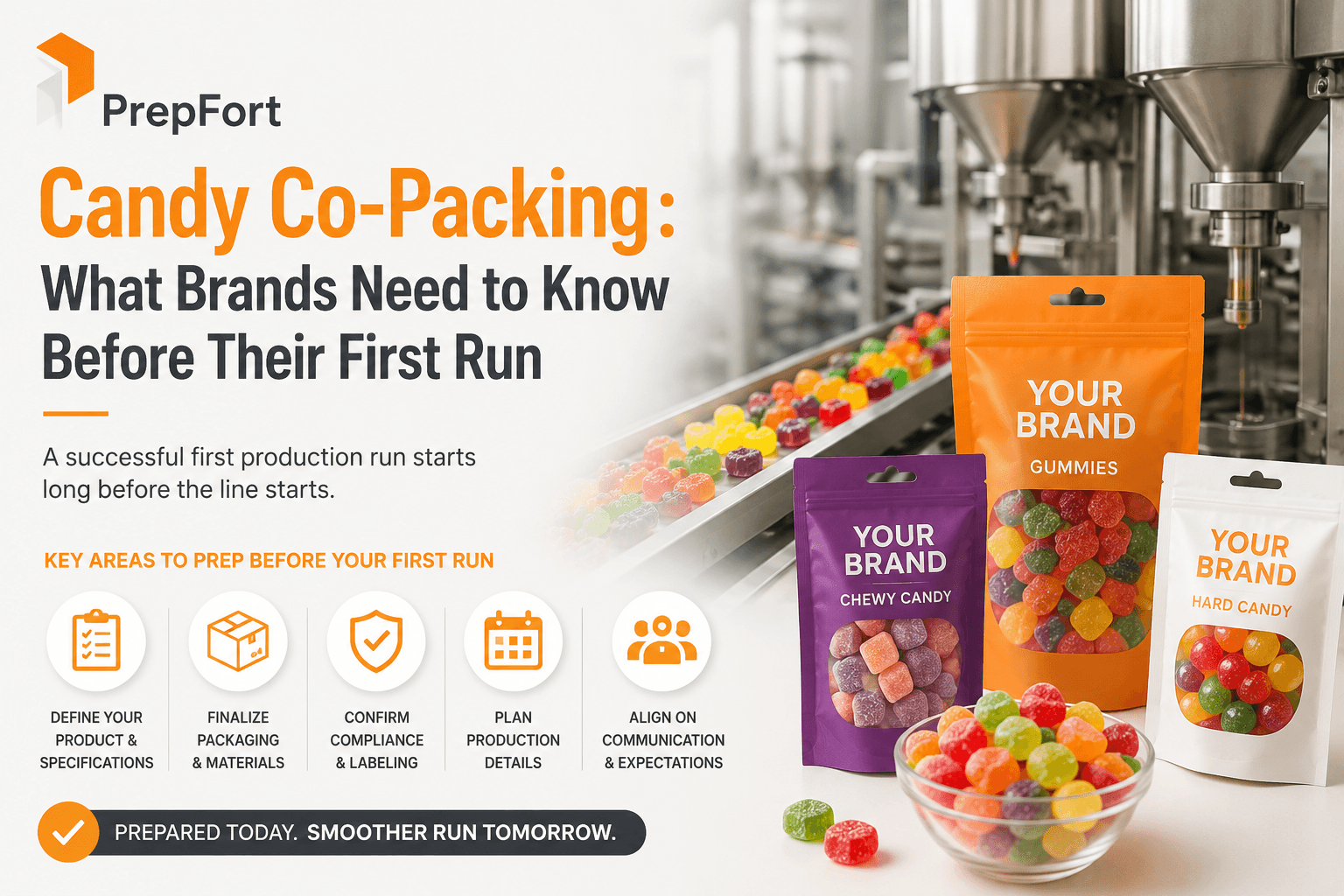
Learn what brands need to know before their first candy co-packing run, including gummy, hard candy, chocolate, private label, and seasonal packaging.
August 25, 2026 · By PrepFort TeamLaunching a candy brand can feel exciting and overwhelming at the same time. There are product ideas, packaging designs, brand positioning, sales channels, and customer expectations to consider. But before a product can reach a store shelf or a customer’s doorstep, it must be manufactured, packaged, labeled, and prepared for distribution.
For many emerging and growing brands, building a full in-house production and packaging operation is not practical. That is where candy co-packing becomes valuable.
Candy co-packing allows brands to outsource part or all of their packaging, assembly, labeling, and preparation to a specialized partner. This can help brands launch faster, reduce fixed equipment costs, and scale production without managing every operational detail internally.
However, a successful first run requires more than simply sending bulk candy to a co-packer. Brands need to understand packaging requirements, labeling rules, quality expectations, lead times, inventory planning, and how co-packing connects to fulfillment.
No hand-offs, no delays, no extra freight.
What Is Candy Co-Packing?
Candy co-packing, also called contract packaging, is the process of outsourcing packaging, labeling, assembly, and preparation of confectionery products to a third-party facility.
A brand may provide:
Bulk candy.
Finished product.
Packaging materials.
Labels.
Design files.
Product specifications.
The co-packer then prepares the product for retail, wholesale, ecommerce, or distribution.
Common Candy Co-Packing Services
Bagging and pouching.
Box assembly.
Label application.
Shrink wrapping.
Case packing.
Bundling.
Kitting.
Retail-ready preparation.
Promotional packaging.
Seasonal packaging.
Co-packing can be used for new product launches, seasonal programs, retail expansions, subscription boxes, promotional campaigns, and ongoing production.
Why Brands Use Candy Co-Packing
Brands choose co-packing for several reasons.
Faster Market Entry
Co-packing allows brands to launch products without building a complete packaging facility.
Lower Fixed Costs
Brands can avoid purchasing and maintaining expensive packaging equipment.
Flexible Volume
Co-packers can often support smaller pilot runs as well as larger production volumes.
Specialized Expertise
Co-packers may have experience with different candy types, packaging formats, labeling requirements, and retail standards.
Scalability
As demand grows, brands can increase production without immediately expanding their own infrastructure.
Focus on Brand Building
Outsourcing packaging allows the brand to focus on marketing, sales, product development, and customer relationships.
Candy Co-Packing Illinois
For brands located in or near the Midwest, candy co-packing Illinois offers geographic and logistical advantages. Illinois is a major transportation and distribution hub, which can support efficient shipping across the United States.
A Chicago-area co-packing facility can help brands:
Reduce freight time.
Consolidate production and fulfillment.
Support retail and ecommerce distribution.
Access a central location for national shipping.
When co-packing and fulfillment are combined in one location, brands can move products from production to finished inventory to outbound shipment without unnecessary transfers.
This is especially valuable for brands searching for one stop co-packing fulfillment kitting Chicago or a manufacturer to fulfillment one location solution.
Gummy Candy Co-Packer
Gummy products are among the most popular confectionery categories. A gummy candy co-packer can support brands that want to package gummies for retail, ecommerce, subscription, or promotional programs.
Gummy Packaging Considerations
Gummies may require:
Moisture-resistant packaging.
Proper sealing to maintain texture.
Accurate fill weights.
Clear labeling.
Attractive retail presentation.
Protection during shipping.
Common Gummy Formats
Stand-up pouches.
Mylar bags.
Resealable pouches.
Retail boxes.
Gift tins.
Variety packs.
Single-serve packs.
Subscription boxes.
Promotional bundles.
A gummy co-packer should understand how to handle the product without damaging texture, shape, or appearance.
Hard Candy Packaging Company
A hard candy packaging company specializes in packaging hard confections such as lollipops, mints, boiled sweets, and similar products.
Hard Candy Packaging Needs
Hard candy may require:
Individual wrapping.
Bagging.
Box packing.
Tin packaging.
Pouch sealing.
Moisture protection.
Clear labeling.
Retail-ready cartons.
Hard candy can be sensitive to humidity and temperature. Packaging should protect the product and maintain its intended texture and appearance.
Chocolate Co-Packing
Chocolate co-packing involves packaging chocolate products such as bars, bites, truffles, coated items, and gift sets.
Chocolate Packaging Considerations
Chocolate may require:
Temperature-controlled storage.
Protective packaging.
Proper sealing.
Attractive presentation.
Gift packaging.
Seasonal designs.
Retail-ready formats.
Chocolate can be sensitive to heat, humidity, and physical damage. A co-packer should understand how to handle and store chocolate products appropriately.
Private Label Chocolate Manufacturer
A private label chocolate manufacturer allows brands to sell chocolate products under their own label without operating a full chocolate production facility.
Private label programs can support:
Custom formulations.
Standard product lines.
Branded packaging.
Retail packaging.
Gift sets.
Seasonal products.
Corporate gifts.
Promotional items.
Private label chocolate can help retailers, ecommerce brands, subscription boxes, event companies, and consumer product businesses launch chocolate products more quickly.
Seasonal Candy Packaging
Seasonal candy packaging includes holiday-themed products, limited-edition assortments, gift boxes, and promotional programs.
Examples include:
Valentine’s Day candy.
Easter assortments.
Halloween candy bags.
Holiday gift boxes.
Seasonal tins.
Limited-edition flavors.
Corporate holiday gifts.
Event favors.
Seasonal programs often require precise timing. Packaging must be completed in time for retail delivery, promotional launches, or customer shipments.
A co-packer that also provides fulfillment can help brands move seasonal inventory directly into storage and outbound shipping without unnecessary transfers.
What Brands Need to Know Before Their First Run
A successful first run depends on preparation, communication, and realistic planning.
1. Define Your Product and Format
Before contacting a co-packer, brands should clarify:
Candy type.
Packaging format.
Fill weight.
Label design.
Case quantity.
Target channels.
Launch timeline.
Clear specifications help the co-packer provide accurate recommendations and pricing.
2. Understand Packaging Requirements
Packaging must meet the needs of the product and the sales channel.
Retail packaging may require:
Barcodes.
Nutrition or ingredient information.
Allergen statements.
Net weight.
Business information.
Country-of-origin information where applicable.
Proper labeling format.
Ecommerce packaging may focus more on:
Product protection.
Branded presentation.
Insert cards.
Bundle preparation.
Subscription packaging.
3. Plan Your Timeline
Co-packing runs require scheduling. Brands should consider:
Production lead time.
Packaging material availability.
Label printing time.
Quality checks.
Shipping time.
Retail or launch deadlines.
Seasonal programs may require earlier planning due to higher demand.
4. Prepare Your Packaging Materials
Brands may need to provide:
Pouches.
Boxes.
Labels.
Shrink wrap.
Inserts.
Gift cards.
Promotional materials.
The co-packer can advise on specifications, quantities, and delivery timing.
5. Understand Minimums and Volumes
Co-packers may have minimum run sizes based on product type, packaging format, and equipment setup.
Brands should discuss:
Minimum order quantities.
Setup fees.
Per-unit costs.
Volume discounts.
Future scaling options.
6. Review Quality and Food Safety Standards
Brands should confirm that the co-packer follows appropriate food safety and quality procedures.
This may include:
Facility certifications.
Sanitation practices.
Allergen controls.
Traceability.
Lot tracking.
Quality inspections.
7. Plan for Inventory and Fulfillment
After packaging, products must be stored, managed, and shipped.
Brands should consider:
Finished-goods storage.
Inventory tracking.
DTC fulfillment.
Retail shipments.
Amazon preparation.
Wholesale distribution.
Kitting and bundling.
When co-packing and fulfillment are in the same location, brands can reduce extra transfers and improve operational visibility.
The Manufacturer to Fulfillment Process
An integrated model allows brands to move products through the entire journey in one place.
Manufacturer → Co-Pack → Kit → Ship
This process can include:
Step One: Manufacture or Receive Product
Products may be manufactured on-site or received as finished or semi-finished goods.
Step Two: Co-Pack and Prepare
Products are packaged according to brand specifications. This may include bagging, boxing, labeling, shrink wrapping, or case packing.
Step Three: Kit and Assemble
Products can be combined into kits, gift sets, variety packs, subscription boxes, or promotional bundles.
Step Four: Store Finished Inventory
Finished goods move directly into warehouse storage instead of being transported to another facility.
Step Five: Pick, Pack, and Ship
The same warehouse fulfills:
Direct-to-consumer orders.
Retail purchase orders.
Wholesale shipments.
Amazon FBA shipments.
Marketplace orders.
Subscription orders.
Promotional campaigns.
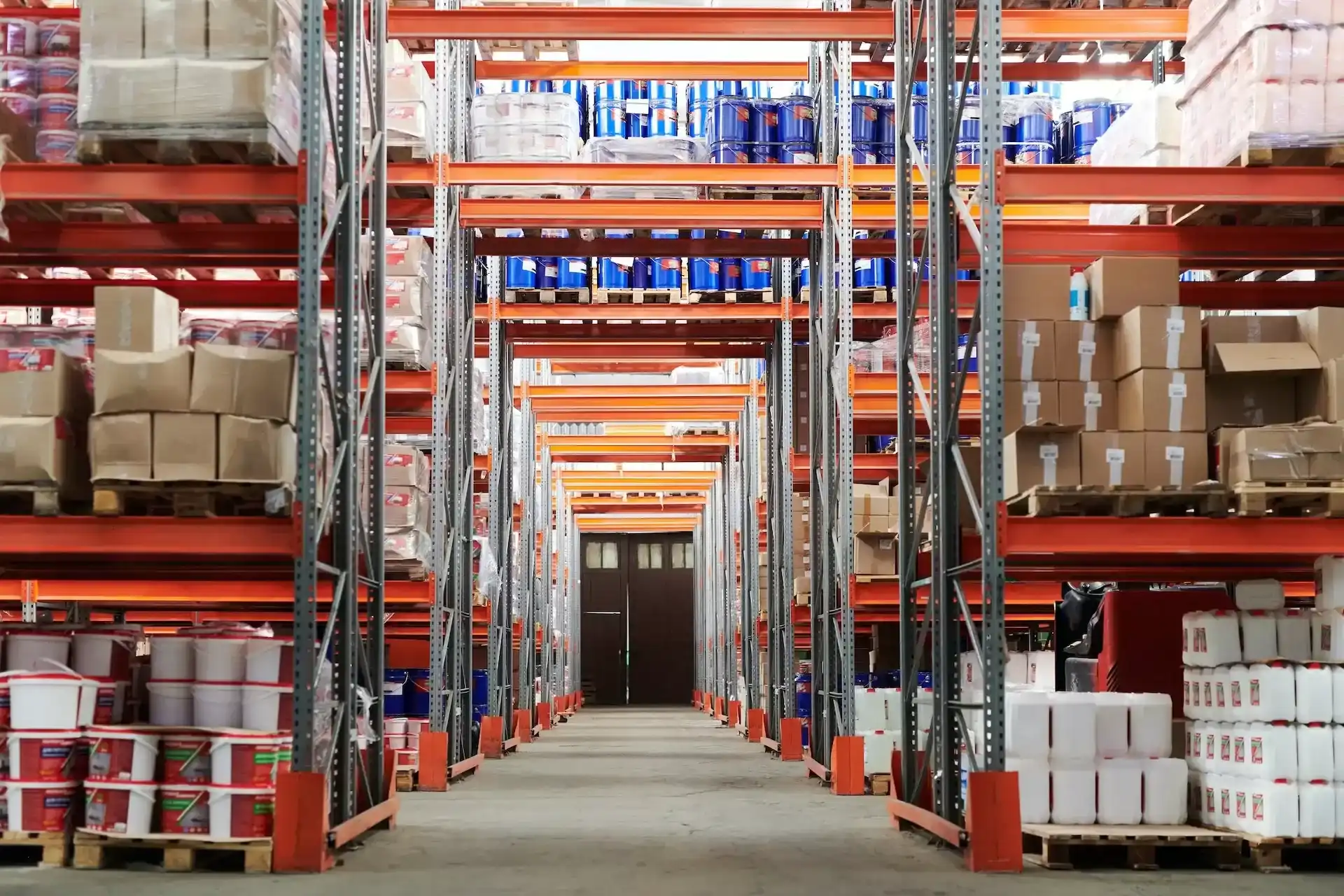
All from a single 30k sqft Chicago warehouse. No hand-offs, no delays, no extra freight.
How One Location Saves Time and Money
Fewer Transfers
Products do not need to move between separate manufacturing, co-packing, kitting, and fulfillment facilities.
Reduced Freight Costs
Eliminating inter-facility shipments can lower transportation expenses.
Faster Order Processing
Finished inventory is already in the fulfillment warehouse, so orders can move more quickly.
Better Inventory Visibility
One location can provide clearer records of raw materials, packed goods, kits, and ready-to-ship products.
Simplified Communication
Brands coordinate with one operational partner instead of multiple vendors.
Faster Problem Resolution
Issues can be addressed within one facility instead of across multiple companies.
One Stop Co-Packing Fulfillment Kitting Chicago
The phrase one stop co-packing fulfillment kitting Chicago reflects a growing demand for connected supply chain services in the Midwest.
A Chicago-area facility can support:
Candy co-packing.
Gummy packaging.
Hard candy packaging.
Chocolate co-packing.
Private label programs.
Seasonal packaging.
Kitting and bundling.
Finished-goods storage.
DTC fulfillment.
Retail shipments.
Wholesale distribution.
Amazon preparation.
This model is especially valuable for brands that want a manufacturer to fulfillment one location solution.
Common Candy Co-Packing Mistakes to Avoid
Underestimating Lead Times
Brands may assume packaging can be completed faster than realistically possible. Planning ahead helps avoid delays.
Incomplete Packaging Specifications
Unclear instructions can lead to incorrect packaging, labeling errors, or misaligned expectations.
Poor Inventory Planning
Brands may not order enough packaging materials or may misjudge production volume.
Ignoring Fulfillment Needs
Packaging may be completed without considering how products will be stored, kitted, or shipped.
Not Reviewing Samples
Skipping sample approval can increase the risk of errors during the full production run.
Overlooking Seasonal Timing
Seasonal programs require earlier planning due to higher demand and retailer deadlines.
Questions to Ask a Candy Co-Packer
Before selecting a partner, brands may want to ask:
What candy types do you support?
What packaging formats can you handle?
What are your minimum run sizes?
What is your typical lead time?
Do you provide kitting and fulfillment?
Can you support retail and ecommerce channels?
What quality and food safety procedures do you follow?
How do you track lots and batches?
Can you support seasonal programs?
Do you offer private label support?
Clear answers help brands choose a co-packer that matches their needs.
Final Thoughts
Candy co-packing can help brands launch products faster, reduce fixed costs, and scale production without managing every operational detail internally. However, a successful first run depends on preparation, clear specifications, realistic timelines, and a strong connection between packaging and fulfillment.