
What Is a Candy Co-Packer and What Services Do They Provide?
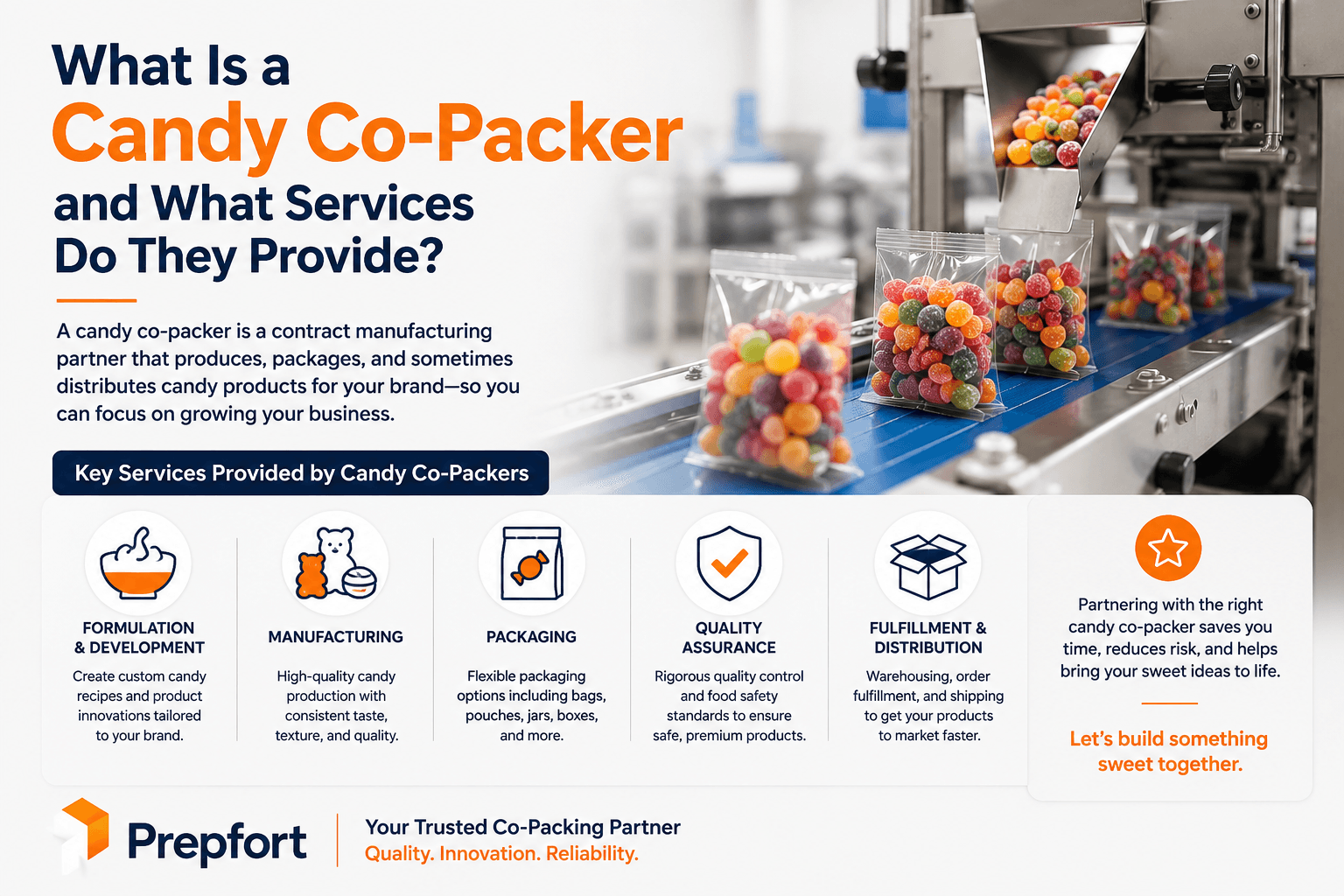
Learn what a candy co-packer is, what services they provide, and how private label, co-packing, and confectionery manufacturing help brands scale with Prepfort.
August 26, 2026 · By PrepFort TeamFor emerging and growing candy brands, bringing a product to market involves more than creating a great recipe. Brands must also manage packaging, labeling, assembly, quality control, inventory, and distribution. For many companies, building a full in-house production and packaging operation is not practical, especially during early growth stages.
This is where a candy co-packer becomes valuable.
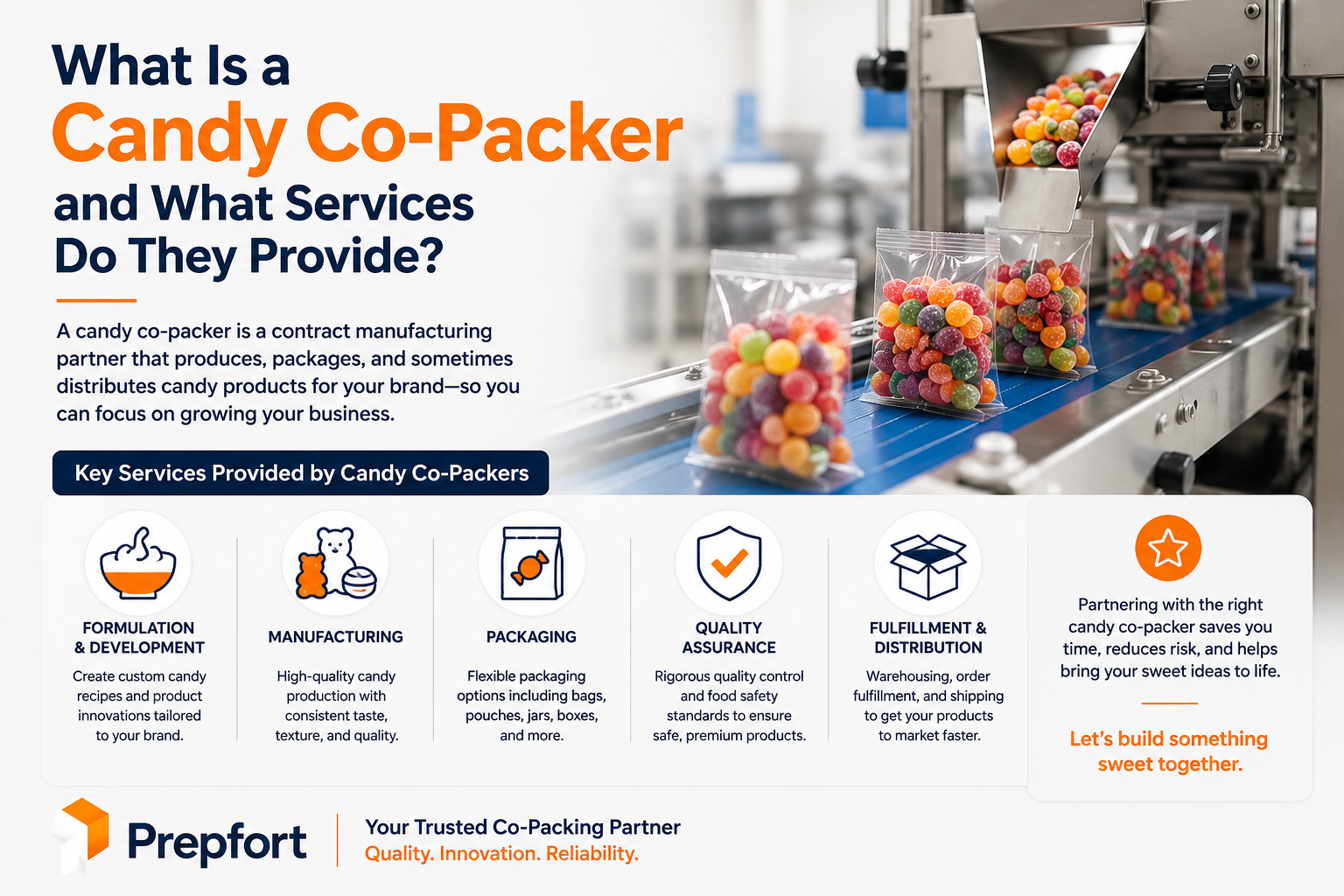
A candy co-packer is a specialized partner that handles packaging, assembly, labeling, and preparation of confectionery products on behalf of brands, retailers, distributors, and food companies. Co-packers allow brands to focus on product development, marketing, sales, and customer relationships while outsourcing the operational complexity of packaging and fulfillment.
At Prepfort, we help brands move from concept to customer through connected co-packing, kitting, and fulfillment services. This article explains what a candy co-packer is, what services they provide, and how brands can use Private Label Candy, Co-Packing, Confectionery Manufacturing, Candy Co-Packing, Private Label, Confectionery, Chocolate Co-Packing, Private Label, Seasonal Candy, Candy Co-Packing — Gummies, Hard Candy, Chocolates, Caramels, and Candy & Confectionery Co-Packing, Private Label to bring products to market more efficiently.
What Is a Candy Co-Packer?
A candy co-packer, also called a confectionery co-packer or contract packaging provider, is a facility that packages, labels, assembles, and prepares candy and confectionery products for resale.
Brands may provide:
Bulk candy.
Finished product.
Packaging materials.
Labels.
Design files.
Product specifications.
The co-packer then prepares the product according to the brand’s requirements for retail, wholesale, ecommerce, subscription, promotional, or distribution channels.
How a Co-Packer Differs from a Manufacturer
A manufacturer typically produces the candy itself, including mixing, cooking, forming, and flavoring. A co-packer focuses primarily on packaging and preparation, although some co-packers also provide manufacturing or private label production services.
Some companies, including Prepfort, offer both manufacturing support and co-packing under one roof, allowing brands to move from production to packaging to fulfillment in a more connected workflow.
Why Brands Use a Candy Co-Packer
Brands choose co-packing for several strategic reasons.
Faster Market Entry
Co-packing allows brands to launch products without investing in a complete packaging facility.
Lower Fixed Costs
Brands can avoid purchasing and maintaining expensive packaging equipment.
Flexible Volume
Co-packers can often support smaller pilot runs as well as larger production volumes.
Specialized Expertise
Co-packers may have experience with different candy types, packaging formats, labeling requirements, and retail standards.
Scalability
As demand grows, brands can increase production without immediately expanding their own infrastructure.
Focus on Brand Building
Outsourcing packaging allows the brand to focus on marketing, sales, product development, and customer relationships.
At Prepfort, we help brands reduce operational complexity by combining co-packing, kitting, and fulfillment in one location.
Core Services Provided by Candy Co-Packers
Candy co-packers provide a wide range of services depending on their capabilities, equipment, and client needs.
Primary Packaging
Primary packaging refers to the immediate container that holds the product.
Examples include:
Pouches.
Bags.
Boxes.
Tins.
Trays.
Flow-wrap packs.
Blister packs.
Stick packs.
Secondary Packaging
Secondary packaging includes outer cartons, cases, displays, and shipping containers.
Examples include:
Retail-ready cases.
Club-store displays.
Gift boxes.
Seasonal cartons.
Shipping cases.
Labeling and Branding
Co-packers may apply:
Product labels.
Nutrition panels.
Ingredient statements.
Allergen information.
Barcodes.
Brand logos.
Promotional stickers.
Seasonal labels.
Assembly and Kitting
Co-packers can assemble:
Gift sets.
Variety packs.
Subscription boxes.
Promotional bundles.
Retail displays.
Corporate gifts.
Event favors.
Quality Control and Inspection
Co-packers may perform:
Visual inspections.
Weight checks.
Seal integrity checks.
Label accuracy reviews.
Case counts.
Damage inspections.
Storage and Fulfillment
Some co-packers also provide:
Finished-goods storage.
Inventory management.
Pick-and-pack fulfillment.
Retail shipments.
Ecommerce orders.
Amazon preparation.
Wholesale distribution.
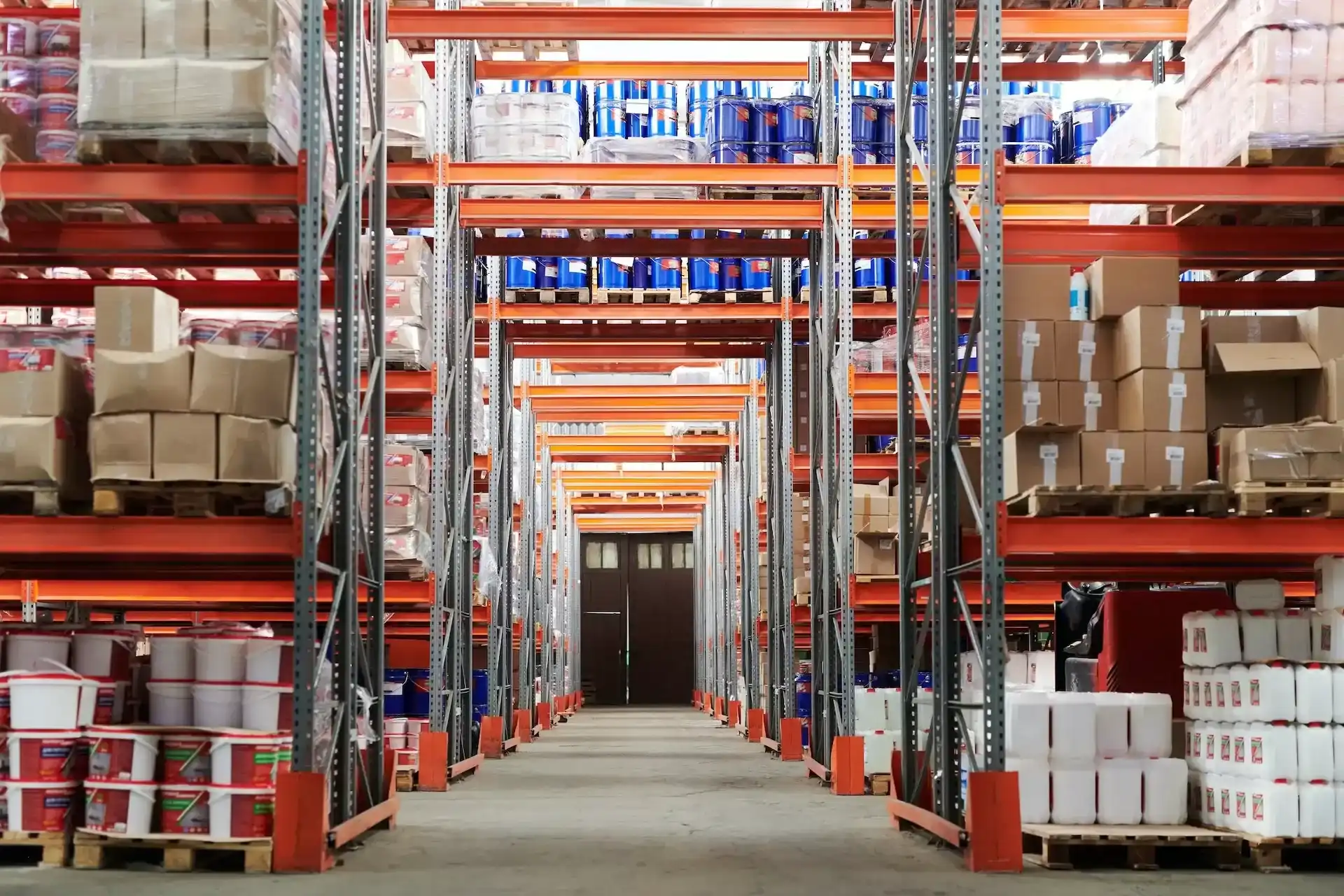
At Prepfort, we combine these services in a single 30k sqft Chicago warehouse to help brands move from Manufacturer → Co-Pack → Kit → Ship without unnecessary hand-offs.
Private Label Candy
Private Label Candy allows businesses to sell confectionery products under their own brand without operating a full manufacturing facility.
A private label program may include:
Product selection.
Formula development.
Packaging design support.
Production.
Packaging.
Labeling.
Case packing.
Storage.
Distribution.
Private label candy can help retailers, ecommerce brands, subscription boxes, event companies, distributors, and consumer product businesses launch candy products more quickly.
Benefits of Private Label Candy
Faster product launch.
Lower equipment investment.
Access to established production capabilities.
Flexible packaging options.
Retail-ready formats.
Scalable production.
Private label programs may support gummies, hard candy, chocolates, caramels, mints, lollipops, and seasonal assortments.
Co-Packing Services
Co-Packing refers to the outsourcing of packaging, assembly, labeling, and preparation tasks to a third-party facility.
Co-packing can be used for:
New product launches.
Seasonal programs.
Retail expansions.
Promotional campaigns.
Subscription boxes.
Corporate gifts.
Event products.
Ecommerce bundles.
Common Co-Packing Tasks
Bagging and pouching.
Box assembly.
Label application.
Shrink wrapping.
Case packing.
Bundling.
Kitting.
Retail-ready preparation.
Promotional packaging.
Seasonal packaging.
Co-packing allows brands to access specialized packaging capabilities without purchasing equipment.
Confectionery Manufacturing
Confectionery Manufacturing involves the production of candy and sweet products. This may include mixing, cooking, forming, flavoring, coloring, and shaping.
Some co-packers also provide manufacturing services, allowing brands to move from concept to finished product in one location.
Types of Confectionery Manufacturing
Gummy production.
Hard candy production.
Chocolate molding.
Enrobing.
Panning.
Caramel production.
Taffy and chewy candy.
Mints and lozenges.
Lollipops.
Seasonal confections.
Brands that do not have their own manufacturing facility may work with a confectionery manufacturer to produce products according to their specifications.
Candy Co-Packing and Private Label
Candy Co-Packing, Private Label combines packaging services with private label production. This allows brands to outsource both manufacturing and packaging under one coordinated program.
A combined program may include:
Product development.
Manufacturing.
Packaging.
Labeling.
Case packing.
Storage.
Distribution.
This model can help reduce hand-offs, simplify communication, and improve operational visibility.
At Prepfort, we support brands with connected co-packing and fulfillment so products can move efficiently from production to customer.
Confectionery Services
Confectionery services cover a broad range of sweet products, including candy, chocolate, mints, gums, and related items.
A confectionery partner may support:
Product formulation.
Ingredient sourcing.
Production.
Packaging.
Labeling.
Quality control.
Storage.
Distribution.
Confectionery services can help brands launch products that meet retail, regulatory, and customer expectations.
Chocolate Co-Packing and Private Label
Chocolate Co-Packing, Private Label focuses specifically on chocolate products. This may include bars, bites, truffles, coated items, gift sets, and seasonal chocolates.
Chocolate Co-Packing Considerations
Chocolate may require:
Temperature-controlled storage.
Protective packaging.
Proper sealing.
Attractive presentation.
Gift packaging.
Seasonal designs.
Retail-ready formats.
Chocolate can be sensitive to heat, humidity, and physical damage. A co-packer should understand how to handle and store chocolate products appropriately.
Private Label Chocolate Programs
Private label chocolate can help brands launch:
Custom formulations.
Standard product lines.
Branded packaging.
Retail packaging.
Gift sets.
Seasonal products.
Corporate gifts.
Promotional items.
Private label chocolate manufacturers may support panned, enrobed, molded, or coated products depending on their capabilities.
Seasonal Candy
Seasonal Candy includes holiday-themed products, limited-edition assortments, gift boxes, and promotional programs.
Examples include:
Valentine’s Day candy.
Easter assortments.
Halloween candy bags.
Holiday gift boxes.
Seasonal tins.
Limited-edition flavors.
Corporate holiday gifts.
Event favors.
Seasonal programs often require precise timing. Packaging must be completed in time for retail delivery, promotional launches, or customer shipments.
A co-packer that also provides fulfillment can help brands move seasonal inventory directly into storage and outbound shipping without unnecessary transfers.
Candy Co-Packing — Gummies, Hard Candy, Chocolates, Caramels
Different candy types require different packaging approaches.
Gummies
Gummies may require:
Moisture-resistant packaging.
Proper sealing.
Accurate fill weights.
Clear labeling.
Attractive retail presentation.
Protection during shipping.
Common formats include stand-up pouches, mylar bags, resealable pouches, retail boxes, gift tins, variety packs, single-serve packs, and subscription boxes.
Hard Candy
Hard candy may require:
Individual wrapping.
Bagging.
Box packing.
Tin packaging.
Pouch sealing.
Moisture protection.
Clear labeling.
Retail-ready cartons.
Hard candy can be sensitive to humidity and temperature. Packaging should protect the product and maintain its intended texture and appearance.
Chocolates
Chocolate products may require:
Temperature-controlled storage.
Protective packaging.
Proper sealing.
Attractive presentation.
Gift packaging.
Seasonal designs.
Retail-ready formats.
Chocolate can be sensitive to heat, humidity, and physical damage. A co-packer should understand how to handle and store chocolate products appropriately.
Caramels
Caramels may require:
Protective wrapping.
Proper sealing.
Moisture control.
Temperature management.
Attractive packaging.
Clear labeling.
Caramels can be sensitive to heat and humidity. Packaging should maintain product texture and prevent sticking.
Candy & Confectionery Co-Packing, Private Label
Candy & Confectionery Co-Packing, Private Label represents a comprehensive service model that combines packaging, assembly, labeling, and private label production for a wide range of confectionery products.
This model can help brands:
Launch products faster.
Reduce fixed equipment costs.
Access specialized packaging capabilities.
Scale production based on demand.
Support retail and ecommerce channels.
Create seasonal and promotional programs.
Simplify operational coordination.
A combined program may support gummies, hard candy, chocolates, caramels, mints, lollipops, seasonal assortments, gift sets, and custom confections.
How Candy Co-Packers Support Brand Growth
Candy co-packers help brands move from concept to market more efficiently.
Product Development Support
Some co-packers provide guidance on:
Product formulation.
Packaging formats.
Labeling requirements.
Retail standards.
Cost considerations.
Packaging and Labeling
Co-packers can prepare products for:
Retail shelves.
Ecommerce shipments.
Subscription boxes.
Promotional campaigns.
Corporate gifts.
Event programs.
Inventory and Fulfillment
Some co-packers also provide:
Finished-goods storage.
Inventory tracking.
Pick-and-pack fulfillment.
Retail shipments.
Amazon preparation.
Wholesale distribution.
An integrated model can help brands move from Manufacturer → Co-Pack → Kit → Ship all from a single facility.
At Prepfort, we help brands reduce hand-offs, delays, and extra freight by keeping co-packing, kitting, and fulfillment in one 30k sqft Chicago warehouse.
What to Look for in a Candy Co-Packer
Not all co-packers offer the same capabilities. Brands should evaluate potential partners carefully.
Capabilities
Candy types supported.
Packaging formats.
Private label options.
Manufacturing support.
Kitting and assembly.
Fulfillment services.
Quality and Compliance
Facility certifications.
Food safety procedures.
Allergen controls.
Traceability.
Lot tracking.
Quality inspections.
Capacity and Lead Times
Minimum run sizes.
Production capacity.
Scheduling flexibility.
Lead times.
Seasonal capacity.
Communication and Support
Responsiveness.
Project management.
Sample approval process.
Problem resolution.
Reporting and visibility.
At Prepfort, we work closely with brands to ensure clear communication, accurate timelines, and smooth execution from the first run through ongoing production.
Common Questions About Candy Co-Packers
Do I Need to Provide Packaging Materials?
Some co-packers source packaging materials, while others require the brand to provide them. This should be clarified before beginning a project.
What Are Minimum Order Quantities?
Minimums vary by co-packer, product type, and packaging format. Brands should discuss volume expectations early in the process.
Can Co-Packers Support Retail and Ecommerce?
Many co-packers support both retail and ecommerce channels. Brands should confirm packaging, labeling, and fulfillment capabilities for each channel.
Do Co-Packers Provide Private Label Support?
Some co-packers offer private label programs, while others focus only on packaging services. Brands should clarify which services are available.
How Long Does a Co-Packing Run Take?
Lead times depend on product type, packaging complexity, material availability, and co-packer capacity. Seasonal programs may require earlier planning.
Final Thoughts
A candy co-packer is a specialized partner that helps brands package, label, assemble, and prepare confectionery products for retail, wholesale, ecommerce, and distribution channels.
Co-packers provide services such as Private Label Candy, Co-Packing, Confectionery Manufacturing, Candy Co-Packing, Private Label, Confectionery, Chocolate Co-Packing, Private Label, Seasonal Candy, Candy Co-Packing — Gummies, Hard Candy, Chocolates, Caramels, and Candy & Confectionery Co-Packing, Private Label.
By outsourcing packaging and production tasks, brands can launch products faster, reduce fixed costs, access specialized capabilities, and scale more efficiently.
At Prepfort, we help brands move from Manufacturer → Co-Pack → Kit → Ship all from a single 30k sqft Chicago warehouse.
No hand-offs, no delays, no extra freight.
For brands searching for a connected supply chain solution, an integrated model that combines manufacturing support, co-packing, kitting, and fulfillment in one location can help reduce hand-offs, simplify communication, and improve operational visibility.
With the right partner, brands can turn their candy concepts into retail-ready, customer-ready products while focusing on what matters most: building a brand customers love.