

Corporate Employee Gift Box Kitting & Fulfillment: The Complete 2026 Guide
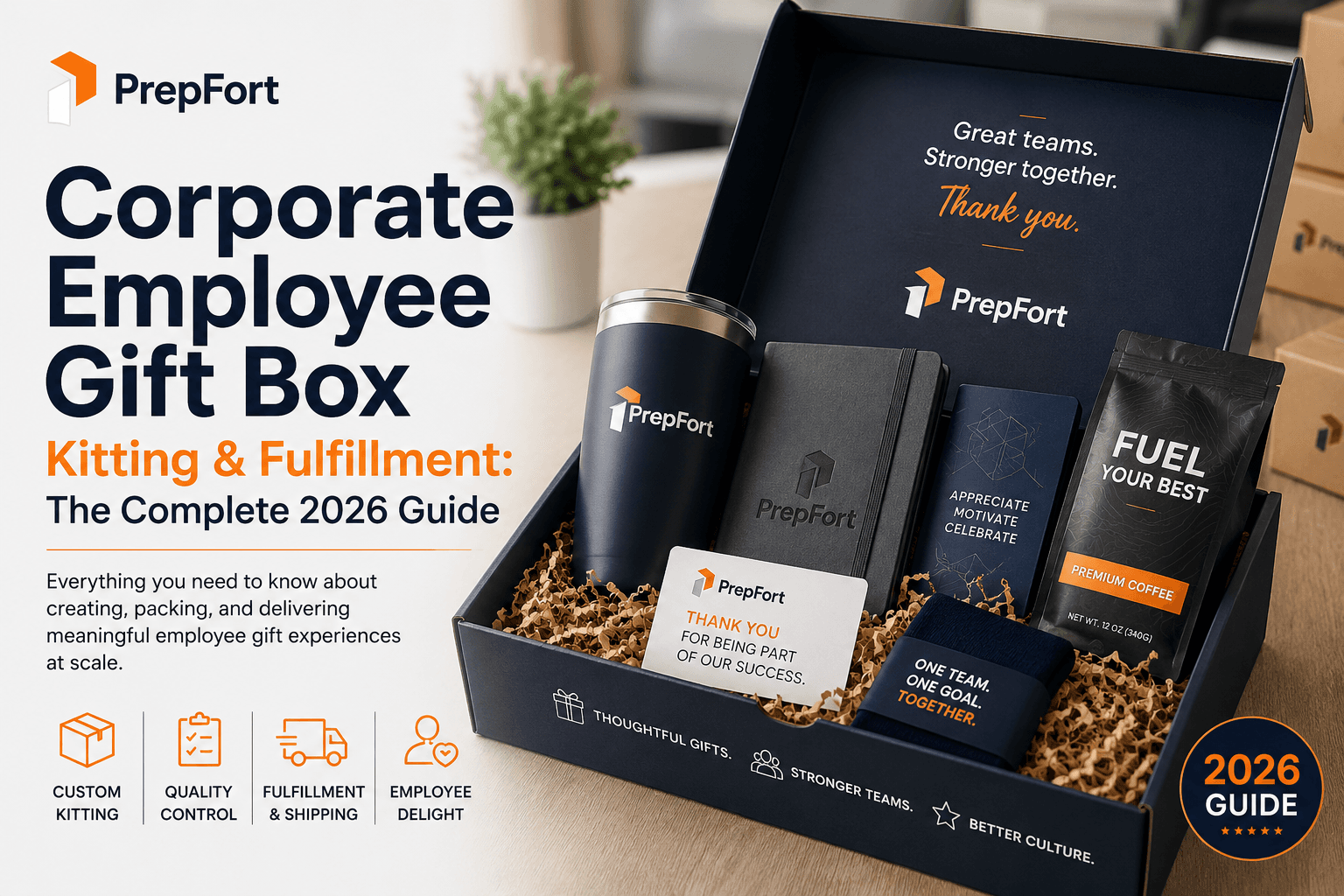
Learn how to build, kit, and fulfill corporate employee gift boxes at scale. Includes real case study: Lemonade Insurance's 350-box holiday project. Expert strategies for remote teams.
September 2, 2026 · By PrepFort TeamIntroduction: Why Corporate Gift Box Kitting Matters in 2026
Corporate employee gift box kitting and fulfillment has evolved from a nice-to-have perk into a strategic imperative for modern HR and People Operations teams. With remote and hybrid workforces now the norm across the United States, companies face a critical challenge: how do you deliver consistent, branded, and meaningful gift experiences to employees scattered across multiple states or even multiple continents without turning your office into a packing warehouse?
The answer lies in professional kitting and fulfillment services. These specialized providers handle everything from custom box design and product sourcing to assembly, warehousing, and multi-address shipping allowing HR teams to focus on what matters most: building culture and recognizing their people.
In this comprehensive guide, we'll cover everything you need to know about corporate employee gift box kitting and fulfillment in 2026, including what kitting and fulfillment actually means, why centralized gifting programs outperform ad-hoc approaches, a step-by-step process for building your gifting program, a real-world case study featuring Lemonade Insurance's 350-box holiday project, best practices for remote employee gifting, cost considerations and budgeting strategies, and common pitfalls and how to avoid them.
Whether you're planning your first employee welcome kit, a holiday gift wave, or a full-year recognition program, this guide will give you the framework to execute flawlessly.
What Is Corporate Employee Gift Box Kitting & Fulfillment?
Defining the Terms
Corporate gift box kitting refers to the process of assembling multiple individual items into a single, cohesive gift package. Instead of shipping a t-shirt, a water bottle, and a notebook separately, kitting combines them into one branded box that arrives ready to unwrap.
Fulfillment encompasses the storage, packing, and shipping of those kitted boxes to individual recipients whether that's a single office address or hundreds of employee home addresses across the country.
Together, kitting and fulfillment create a turnkey solution for corporate gifting: you design the experience, and your fulfillment partner handles the logistics.
The Kit-and-Ship Model vs. Gifting Platforms
It's important to distinguish between two approaches to corporate gifting. Gifting software platforms operate like subscription services. They offer digital catalogs where employees can choose their own gifts, but they typically charge recurring software fees or seat licenses on top of product costs. These platforms excel at gift choice and e-gifts but often lack deep customization for branded physical kits.
Kit-and-ship suppliers, like the model we'll discuss in this guide, focus on the physical side: custom-printed boxes, kitting and assembly, warehousing, and shipping to each recipient. There's no software layer just direct pricing for packaging and fulfillment per project. This model is ideal for companies that want repeatable, branded physical kits from 50 units upward.
When comparing the two approaches, gifting software platforms charge for memberships or seat licenses plus gifts, use catalog packs for packaging, store stock according to the platform's terms, and are best suited for gift choice and e-gifts at scale. In contrast, kit-and-ship suppliers charge for boxes, kitting, and shipping on a per-project basis, offer custom dieline and full-color print packaging, warehouse stock at the fulfillment center, and are best suited for branded physical kits from 50 units upward.
Why HR Teams Should Centralize Their Gifting Program
The Retention Link Is Real
Research shows that companies with formal recognition programs experience approximately 31% lower turnover than those without one. While gifting isn't the entire recognition strategy, it's often the most tangible, most photographed part of it.
When every manager buys gifts independently, some teams receive thoughtful hampers while others get nothing and that inconsistency quietly erodes trust faster than any single missed occasion. Centralizing your gifting program under one owner with standardized tiers ensures fairness, consistency, and measurable impact across departments and locations.
The Business Case for Centralization
A centralized gifting program allows HR to report on outcomes that stakeholders actually care about, including fairness and consistency across departments and locations, employer brand strength in reviews and referrals, retention metrics particularly among recognized cohorts, and measurable engagement uplift tied to specific gifting moments.
Pro Tip: Give your gifting program a named owner and a simple approval threshold, such as requiring any spend over $500 to have sign-off from a department head. Without that, every festive season becomes a scramble of last-minute individual purchases nobody budgeted for.
The Four Pillars of Employee Gifting Programs
Most successful employee gifting programs revolve around four key moments in the employee lifecycle. Designing one box system that serves all four moments allows you to stop reinventing packaging every quarter.
1. New-Hire Onboarding (Welcome Kits)
The purpose of welcome kits is to make new employees feel welcomed and equipped from day one. Typical contents include a welcome letter from leadership, a branded notebook and pen, drinkware such as a tumbler, water bottle, or mug, a company t-shirt or hoodie sized appropriately, and stickers or small branded merch. Packaging should consist of welcome kit boxes printed with first-day messaging or company values. Timing is critical: ship to arrive on or before the employee's start date.
2. Milestones and Anniversaries
The purpose of milestone and anniversary gifts is to recognize tenure, promotions, and major project completions. Typical contents include step-up gifts for service anniversaries at one year, five years, and ten years, promotion recognition items, and personalized inserts such as handwritten notes or milestone-specific messaging. Packaging should use rigid magnetic closure boxes that read as a gift, not a shipment. Ship to arrive on the anniversary date or within the same week as the promotion announcement.
3. Appreciation Sends
The purpose of appreciation sends is to show gratitude after big launches, hard quarters, or company-wide achievements. Typical contents include snacks and treats, candles or self-care items, small branded merch, and a thank-you card from leadership. Packaging consists of printed gift boxes delivered in bulk to the office or shipped per address. Ship within one to two weeks of the achievement or milestone.
4. Holiday Sends
The purpose of holiday sends is year-end appreciation and seasonal celebration. Typical contents include seasonal treats like cookies and hot chocolate, cozy items such as blankets, socks, and gloves, branded apparel including hoodies and beanies, and gift cards or charitable donations. Packaging uses a seasonal print run over the same base dieline used year-round. Time this as one wave to the full roster in early-to-mid December.
Real-World Case Study: Lemonade Insurance Holiday Project
To illustrate how corporate gift box kitting and fulfillment works in practice, let's examine a real-world example from late 2025.
Client Overview
Lemonade Insurance operates in the insurance and technology industry with approximately 400 remote employees. The buyer was HR and People Operations, the project type was end-of-year holiday gift boxes, the budget model was per-box pricing, the timeline was Q4 during the holiday season, and the delivery scope was nationwide multi-address shipping across the United States.
The Challenge
Lemonade Insurance wanted to send a thoughtful, branded holiday gift to every remote employee—but with a fully distributed team, traditional gifting methods like bulk shipping to an office, manual assembly, and individual label printing were not scalable.
They needed a partner who could receive multiple SKUs including hoodies, name plates, keychains, and bottles, sort items by employee name and home address, assemble each box to exact specifications, personalize packaging per unit, ship nationwide to hundreds of unique addresses, and provide one invoice and one point of contact.
What the Client Provided
Lemonade Insurance shipped the following branded items in bulk to the fulfillment center: branded hoodies sorted by employee size, custom name plates engraved per employee, branded keychains, and branded water bottles with the company logo.
The Kitting & Fulfillment Process
Step 1: Receiving & Inventory Intake
All items were received, counted, and logged into the warehouse management system. Each SKU was barcode-scanned and stored in designated zones for easy picking.
Step 2: Sorting by Employee Name & Address
Using the client-provided employee list including name, size, and home address, all items were sorted into individual kits. Hoodies were matched by size, name plates by employee name, and all components were grouped per recipient.
Step 3: Custom Assembly Per Box
Each gift box was assembled to spec: the hoodie was folded and placed in branded tissue, the name plate was positioned on top, the keychain and water bottle were arranged neatly, a personalized insert card was added, and the box was sealed with a branded sticker.
Step 4: Custom Packaging Per Unit
Each box was packed in a custom-branded mailer with the employee name on the shipping label, a personalized gift tag inside, a branded outer box or poly mailer, and optional holiday-themed wrap or ribbon.
Step 5: Nationwide Multi-Address Shipping
Hundreds of unique shipping labels were generated, and each box was shipped directly to the employee's home address. All tracking numbers were synced and shared with the client.
Step 6: One Invoice, One Vendor
Lemonade Insurance received a single invoice covering receiving, sorting, assembly, packaging, shipping, and project management—no coordinating with multiple vendors, no hidden fees, no operational headaches.
The Results
The project delivered 350 to 400 individual gift boxes assembled and shipped, achieved 100% delivery to remote employees' homes, completed nationwide multi-address delivery across all 50 states, provided one invoice from one vendor, reported zero errors or misships, saved the client over 40 hours of internal labor, and ensured employees received personalized, branded gifts on time for the holidays.
Client Quote
"The kitting and fulfillment partner made our holiday gifting project effortless. We sent them bulk items, and they handled everything—sorting, personalization, packing, and shipping to 400 remote employees. One invoice, zero stress. Our team loved the gifts!" — HR Director, Lemonade Insurance
Key Takeaways for Your Program
The Lemonade Insurance project demonstrates several best practices that apply to any corporate gifting initiative. Centralize fulfillment under one vendor to eliminate handoffs and reduce complexity. Collect accurate address data early, especially for remote and hybrid staff. Personalize at scale using employee-specific data such as names, sizes, and departments. Plan lead times carefully, especially for holiday peaks by ordering by October for December delivery. Request physical samples before committing to bulk production. Build buffer stock of five to ten percent extra for last-minute hires or damaged items in transit.
How to Set Up Your Corporate Gifting Program: A Step-by-Step Checklist
Follow this eight-step framework to build a repeatable gifting program rather than reinventing gifting every quarter.
Step 1: Appoint a Program Owner
Designate one person or a small committee to hold the budget and make final decisions. This prevents gifting from becoming a committee-driven process where decisions stall and consistency erodes.
Responsibilities of the program owner include owning the annual gifting budget, approving supplier selection and tier structures, coordinating with Finance for spend tracking, and serving as the single point of contact for the fulfillment partner.
Step 2: Define Your Objectives
Decide whether your priority is retention, onboarding warmth, client goodwill, or a combination of all three—because that shapes your tier structure and content choices.
Questions to ask include: Are we trying to reduce turnover in specific departments? Do we want to improve new-hire ramp time and satisfaction? Are we focused on client retention and upsell opportunities? What emotions do we want recipients to feel, such as valued, surprised, or proud?
Step 3: Set a Budget Envelope
Agree on an annual spend before you price individual gifts, not after. This prevents budget creep and ensures you have flexibility for unexpected occasions.
Use this budgeting framework: entry tier at $25 to $50 per person for birthdays, work anniversaries under three years, and thank-yous; mid tier at $50 to $100 per person for promotions, team wins, and five-year milestones; premium tier at $100 to $250+ per person for leadership departures, ten-year milestones, and major client wins.
Pro Tip: Standardize amounts so nobody negotiates a "special" gift outside the rules.
Step 4: Draft Three Value Tiers
Create entry, mid, and premium tiers in advance so spend never depends on who is asking. For the entry tier, target occasions like birthdays, anniversaries under three years, and thank-yous with typical contents including letterbox gifts, small snacks, and branded pens or notebooks at a price range of $25 to $50. For the mid tier, target promotions, team wins, and five-year milestones with curated boxes, apparel, drinkware, and personalized inserts at a price range of $50 to $100. For the premium tier, target leadership departures, ten-plus year milestones, and major client wins with hampers, bespoke branded sets, and premium tech items at a price range of $100 to $250+.
Step 5: Build an Approval Workflow
Define who signs off on bulk orders and at what spend level it escalates. This prevents unauthorized spending and ensures alignment with budget envelopes.
Use this sample workflow: orders under $500 require program owner approval, orders from $500 to $2,000 require department head approval, and orders over $2,000 require Finance plus HR leadership approval.
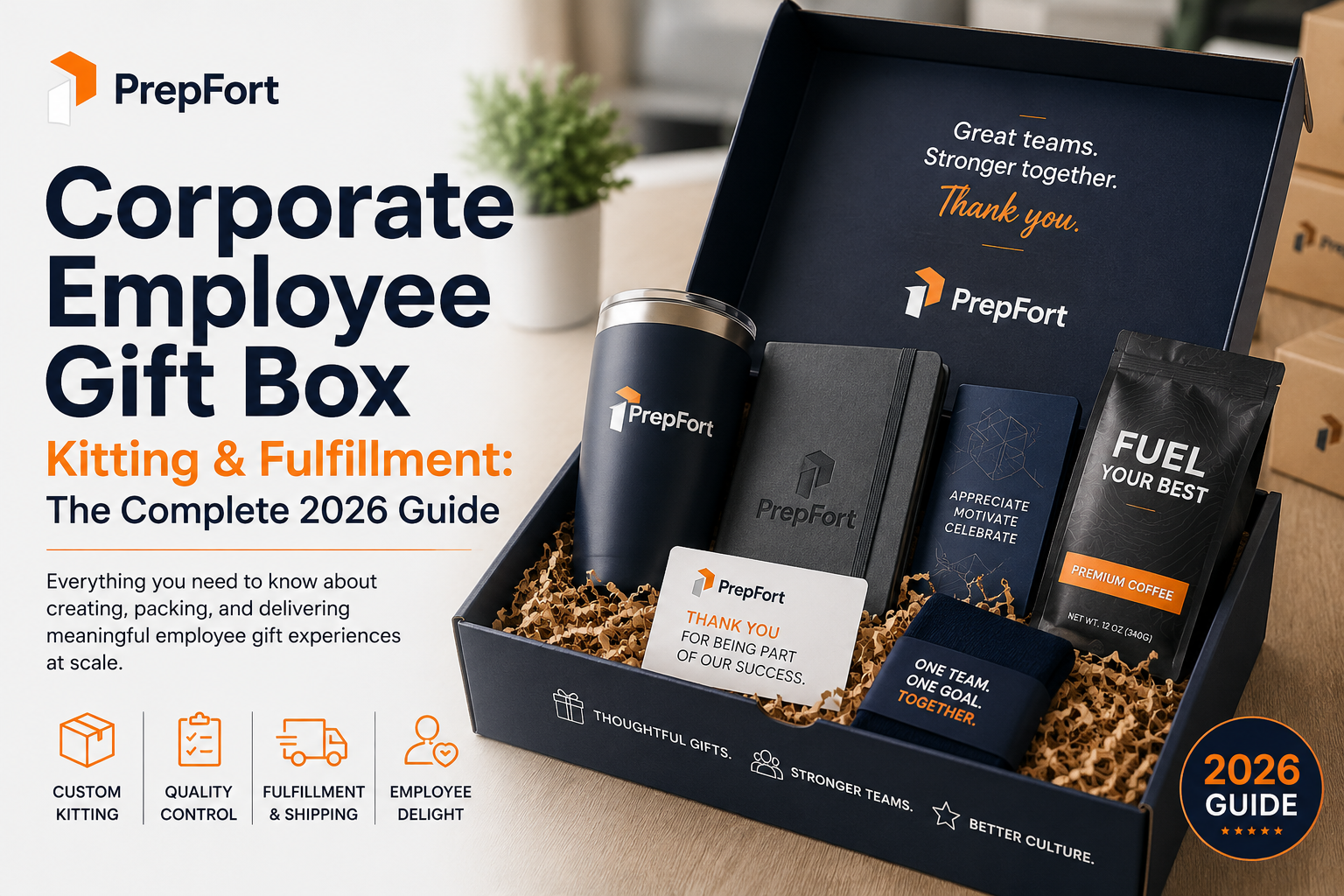
Step 6: Order and Approve Samples
Never commit to volume before someone on your team has physically opened the box. Photos flatten color and texture, and a sample is the only way to catch packaging issues before they land on fifty desks at once.
Use this sample checklist: Does the box arrive intact and not crushed? Do colors match your brand guidelines? Are inserts positioned correctly? Is personalization such as names and messages accurate? Do food items meet dietary and allergy requirements?
Pro Tip: Allow three to seven working days for sample approval, five to ten days for customization setup, and one to three weeks for bulk production. Lock your lead times early, especially if you're shipping around a holiday peak.
Step 7: Onboard Your Supplier
Share your artwork, address list format, and delivery preferences early. The more context your fulfillment partner has, the smoother the execution.
Information to provide includes brand guidelines with logo files, color codes, and fonts; employee address list in CSV or Excel format with columns for name, address line one, address line two, city, state, ZIP, and phone; apparel size breakdown if applicable; dietary and allergy notes if food is included; delivery timeline and any hard deadlines; and personalization fields such as names, initials, department, or short messages.
Step 8: Schedule Review Dates
Revisit tiers and occasions annually so the program doesn't calcify. What worked last year may not resonate this year—especially as your workforce demographics shift.
Annual review questions include: Did we hit our retention or engagement goals? Which gifts received the most positive feedback? Were there any delivery issues or errors? Do our tiers still align with our budget and objectives? Should we add or remove any occasions?
Shipping to Remote Employees: How Multi-Address Fulfillment Works
One of the biggest advantages of professional kitting and fulfillment is the ability to ship directly to employee home addresses—no matter where they're located.
The Process
Printed boxes and gift contents sit kitted or ready to kit at the fulfillment center. You supply the recipient roster including names, addresses, and sizes if apparel is included. The fulfillment partner pick-packs each kit and ships it to the individual address, whether office or home. Tracking numbers are provided for each shipment so employees can follow their delivery status.
Your side of the work stays small: choose the contents, keep the address list current, and flag apparel sizes. A holiday gift box for employees can hit every home in one December wave, while welcome kits ship one at a time all year from the same stock.
Best Practices for Remote Gifting
Collect Sizes During Onboarding
Order apparel in a smart size spread, or collect sizes during onboarding so shirts actually fit. Nothing undermines a welcome kit like a t-shirt that doesn't fit.
Keep Buffer Stock
Keep a small buffer of extra kits on hand for last-minute hires. Order five to ten percent extra to account for damaged items in transit or unexpected additions to the employee list.
Lock In Your Kit Design
Lock in your kit design once so every employee gets a consistent, on-brand experience. Changing the box design or contents frequently creates confusion and dilutes brand recognition.
Refresh Address Data Annually
Address data decays fast—remote and hybrid teams change address more often than HR systems get updated. Build an address refresh into your annual calendar, not just your onboarding checklist.
Use Tracking for All Shipments
Insist on tracking numbers for each shipment so employees can follow their delivery status. This reduces "where's my gift?" inquiries and provides peace of mind.
Cost Considerations: What Does Corporate Gift Kitting & Fulfillment Actually Cost?
Pricing Models
Most kitting and fulfillment providers quote per project based on box quantity with volume discounts applying, component count which is the number of items per kit, customization level including printed boxes and personalized inserts, and shipping destinations whether domestic or international.
For volume pricing, custom gift boxes can start as low as $0.44 per unit at volume, typically at 500+ units, with standard custom boxes starting at 50-unit minimums.
Cost Breakdown by Tier
For the entry tier, box and packaging costs range from $3 to $5, contents from $15 to $30, kitting and labor from $2 to $4, shipping per box from $8 to $12, and total per box from $28 to $51. For the mid tier, box and packaging costs range from $5 to $8, contents from $35 to $60, kitting and labor from $3 to $5, shipping per box from $8 to $12, and total per box from $51 to $85. For the premium tier, box and packaging costs range from $8 to $15, contents from $70 to $150, kitting and labor from $4 to $7, shipping per box from $10 to $15, and total per box from $92 to $187.
Note: These are estimated ranges based on industry standards. Actual costs vary by supplier, volume, and customization level.
Hidden Costs to Watch For
Customization fees may apply for artwork setup, digital proofs, and custom inserts. Warehousing fees may be charged by some providers for monthly storage of kitted inventory. Rush fees for expedited production or shipping can add 20 to 50% to base costs. International duties should be confirmed early—ask whether the supplier offers delivered duty paid terms so recipients aren't hit with unexpected customs charges.
Pro Tip: Build a small contingency of 10 to 15% into your annual envelope for last-minute occasions—they always come up, and a program with no flexibility quickly gets bypassed by exactly the ad hoc spending it was designed to prevent.
Common Pitfalls and How to Avoid Them
Pitfall #1: Treating Gifting as a One-Off Purchase
The problem is that every occasion starts from zero with no agreed tiers, no approved supplier, and no lead-time buffer. The fix is to follow the eight-step framework above to build a repeatable program. Centralize ownership, standardize tiers, and lock in lead times early.
Pitfall #2: Skipping the Sample Step
The problem is that a box that photographs well can still arrive crushed, or a "vegan" hamper can contain an oversight that only shows up once someone opens it. The fix is to always order and physically inspect a sample before committing to any volume order. Allow three to seven working days for sample approval.
Pitfall #3: Inconsistent Tiers Breed Resentment
The problem is that if one manager sends a $25 letterbox gift and another sends a $75 hamper for the same occasion, staff notice—and it undermines the fairness a centralized program is meant to deliver. The fix is to set standardized value tiers tied to clear occasions rather than letting individual managers choose amounts. Route all gifting decisions through one program owner.
Pitfall #4: Peak Season Bottlenecks
The problem is that December demand stretches production and courier networks, so orders placed in early December for a mid-December delivery are gambling with lead times. The fix is to lock your Christmas gifting brief by October if you can. Allow one to three weeks for bulk production plus two to five working days for standard shipping.
Pitfall #5: International Shipping Gets Underestimated
The problem is that customs delays, duty charges, and address formats vary by country, and assuming your domestic supplier handles all of that smoothly is a frequent, costly mistake. The fix is to check early whether your supplier offers delivered duty paid terms. Ask whether they provide multi-destination tracking and local returns handling for international shipments.
Pitfall #6: Address Data Decays Fast
The problem is that remote and hybrid teams change address more often than HR systems get updated, and a bounced parcel two days before a milestone is a bad look. The fix is to build an address refresh into your annual calendar, not just your onboarding checklist. Confirm your audience list and addresses are current before placing any bulk order.
Measuring Success: How to Track Your Gifting Program's Impact
Operational KPIs
Track these metrics to ensure your fulfillment partner is delivering reliably. On-time delivery rate is the percentage of gifts that arrive by the target date. Error rate is the percentage of kits with wrong items, damaged packaging, or incorrect personalization. Cost per unit is total program spend divided by number of recipients. Tracking availability is the percentage of shipments with working tracking numbers.
People KPIs
Measure the human impact of your gifting program. Recognition uptake is the percentage of employees who receive gifts versus total eligible population. Sentiment scores come from short pulse surveys after major gifting moments, such as asking "How valued did you feel after receiving your holiday gift?" on a one to five scale. Redemption or claim rates track how many employees actually claim their gift if gifts involve a choice or voucher element. Turnover within recognized cohorts compares voluntary departure rates among employees who receive regular recognition gifts versus those who don't.
Pro Tip: Report gifting activity as one input into retention, not the whole story. Stakeholders trust a one-page summary that shows delivery reliability, uptake, and directional sentiment far more than a single vanity statistic.
Sustainability and Personalization: Building Values-Aligned Gifting
Sustainability Considerations
Thoughtful, values-aligned gifting outperforms generic branded merchandise almost every time—because recipients can tell the difference between a logo slapped on a mug and a gift chosen with them in mind.
Sustainable practices to consider include using recyclable packaging with FSC-certified paper stock and soy-based inks, avoiding plastic wrap, foam, or non-recyclable fillers with plastic-free inserts, sourcing food and merchandise from local suppliers to reduce carbon footprint, and including a card noting a charitable donation made in the employee's name as a charity add-on.
These practices tend to pay back in stronger engagement and social sharing, particularly with younger workforces who notice packaging waste.
Personalization Levels
Consider three levels of personalization. Basic branding uses a logo or company colors on packaging and has low cost and low emotional impact. Recipient choice lets the person pick flavors, scents, or apparel size themselves. Deep personalization includes handwritten notes, role-specific items, or milestone-specific inserts.
Pro Tip: Collect dietary and allergy preferences through a short, optional form at onboarding rather than asking around a team individually. It's more private for staff and saves you chasing details every single occasion.
The Recurring Kit-and-Ship Model: How It Works Long-Term
The most efficient way to run a corporate gifting program is the recurring kit-and-ship model. Here's how it works in practice.
Step 1: Design Once
Free dieline design and a digital proof, with two revision rounds, produce a box system you can reuse for welcome, milestone, and holiday variants.
Step 2: Print at Volume
Production runs from about seven business days after proof approval, though complex or high-volume jobs take longer, so schedule reprints before stock gets tight.
Step 3: Warehouse at the Fulfillment Center
Boxes and contents are stored at the fulfillment partner's warehouse. Contents you buy elsewhere can ship straight to the center for kitting.
Step 4: Trigger the Sends
Welcome kits ship as start dates land, milestone boxes ship on a monthly or quarterly batch, and one holiday wave goes to the full roster.
Step 5: Reorder on a Threshold
When stock dips below the next quarter's expected sends, reprint against the same dieline.
The advantage is that you don't have to meet a minimum every time five new hires start on a Monday. One print run can feed a year of sends.
Conclusion: Building a Gifting Program That Scales
Corporate employee gift box kitting and fulfillment is no longer optional for companies with remote or hybrid workforces—it's a strategic necessity. By centralizing your gifting program under one owner, standardizing three value tiers, ordering physical samples before bulk production, and locking in lead times early, you can transform ad-hoc gifting into a repeatable program that supports measurable retention and engagement.
The Lemonade Insurance case study demonstrates that even complex, multi-SKU holiday projects with 350+ recipients can be executed flawlessly with the right fulfillment partner. Whether you're sending welcome kits to new hires, milestone gifts to tenured employees, or holiday boxes to your entire roster, professional kitting and fulfillment allows you to focus on culture-building while your partner handles the logistics.
Ready to build your program? Start by requesting quotes from two to three fulfillment partners, order samples, and lock in your first tier before your next recognition moment. Your employees—and your retention metrics—will thank you.
FAQ: Corporate Employee Gift Box Kitting & Fulfillment
What is corporate gift box kitting?
Corporate gift box kitting is the process of assembling multiple individual items such as apparel, drinkware, and snacks into a single, cohesive gift package that's ready to ship to employees or clients.
How much does corporate gift kitting cost?
Costs vary by volume, customization, and contents. Custom gift boxes can start as low as $0.44 per unit at volume, with total per-box costs ranging from $28 to $51 for the entry tier to $92 to $187+ for the premium tier.
How far in advance should I order corporate gifts?
Allow three to seven days for sample approval, five to ten days for customization setup, and one to three weeks for bulk production. For holiday peaks, lock your brief by October for December delivery.
Can gifts be shipped to multiple addresses?
Yes. Professional fulfillment partners can ship directly to individual employee home addresses anywhere in the US and often internationally.
What's the minimum order quantity?
Most providers have minimums starting at 50 units for standard custom boxes and 100+ units for specialty rigid formats.
Do fulfillment partners handle personalization?
Yes. Most providers can personalize with employee names, initials, departments, or short messages.
How do I measure the success of my gifting program?
Track both operational KPIs such as on-time delivery, error rate, and cost per unit, and people KPIs such as recognition uptake, sentiment scores, and turnover within recognized cohorts.
What goes wrong most often with corporate gifting?
Common pitfalls include treating gifting as a one-off purchase, skipping the sample step, inconsistent tiers, peak season bottlenecks, and underestimated international shipping complexities.